

Should You JV Instead of Assigning Your Deal?
Most wholesalers default to one exit:
Assign it.
Collect the fee.
Move on.
But that’s not always the smartest move.
Sometimes assigning the deal kills the margin.
Sometimes the spread is thin.
Sometimes the buyer hesitates.
And sometimes…
The deal is stronger than your assignment model allows.
That’s where JV becomes interesting.
First — What Is a JV in This Context?
In wholesale real estate, a JV (joint venture) usually means:
You bring the deal.
Another investor brings capital and/or execution.
You split the profit on the back end.
Instead of a fixed assignment fee, you participate in upside.
That changes the math.
When Assigning Makes Sense
Assignment is ideal when:
-
The equity spread is deep
-
Buyer margin is obvious
-
The deal survives stress testing
-
You want speed and liquidity
If your deal already supports:
-
Investor profit
-
Holding costs
-
Market compression
Then assigning is clean and simple.
But if you haven’t stress-tested the numbers yet, start here:
How to Know If Your Wholesale Deal Is Good
Because weak deals don’t get better under JV. They just shift risk.
When Assignment Starts Breaking Down
Here’s a common scenario:
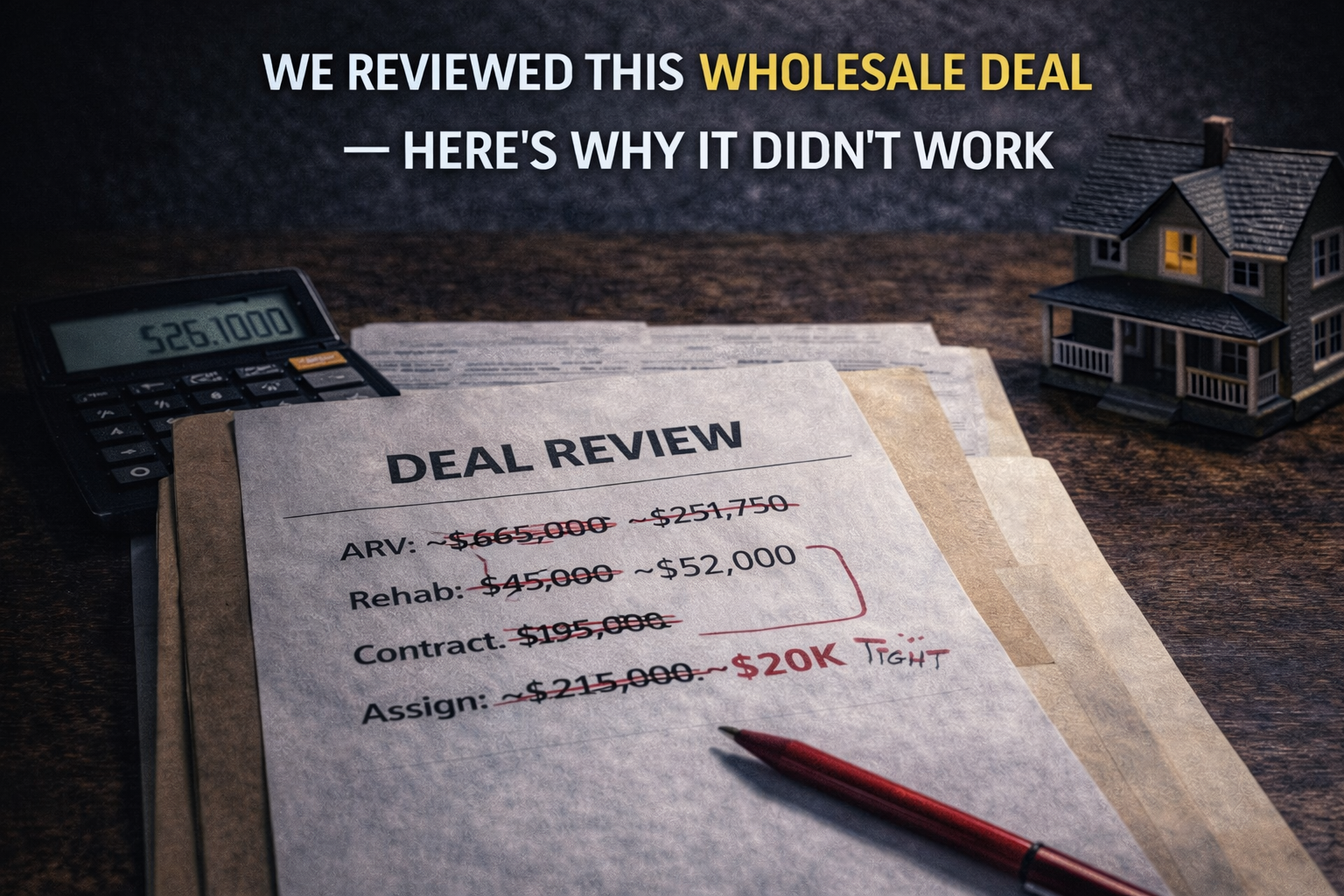
ARV: $240,000
Rehab: $50,000
Contract: $170,000
On paper there’s room.
But once you try to assign at $190,000:
Buyers hesitate.
Why?
Because the margin feels tight.
This ties directly to:
How Much Assignment Fee Is Too Much?
If your fee eliminates buyer cushion, the deal stalls.
Where JV Can Make Sense
JV works best when:
-
The spread is real but thin
-
Market direction is uncertain
-
The buyer wants more upside to justify risk
-
You trust the operator
Instead of forcing a $20K assignment, you might:
-
Split $40K–$50K back-end profit
-
Or structure 60/40 after costs
-
Or JV on refinance upside
That aligns incentives.
But it also introduces risk.
The Risks of JV Most Wholesalers Ignore
JV means:
-
You’re tied to execution quality
-
Timeline matters
-
Rehab discipline matters
-
Market shifts matter
-
Transparency matters
If the operator drags the project, your payout drags.
If rehab blows out, profit shrinks.
JV magnifies both upside and downside.
Before you JV, you need to understand market direction. If you missed this, read:
How to Price a Wholesale Deal in a Slowing Market
Because in a slowing market, backend splits become riskier.
The Strategic Question
Ask yourself:
Is the deal strong — or am I trying to rescue a weak one?
JV should amplify strength.
Not mask thin equity.
If the numbers only work under perfect assumptions, neither assignment nor JV will save it.
This connects directly to:
When a Wholesale Deal Looks Good — But Isn’t
When JV Signals Strength
Serious operators use JV strategically when:
-
They want to build relationships
-
They want recurring partnerships
-
They want larger plays
-
They want long-term positioning
It signals:
“I’m confident enough in this deal to stay involved.”
That’s different than:
“I need to dump this contract.”
Buyers can tell the difference.
The Reputation Factor
If you JV:
Protect your name.
Only partner with:
-
Transparent operators
-
Clear accounting
-
Defined scope
-
Written agreements
-
Defined payout structure
Because your brand compounds — or erodes — based on who you partner with.
Not Sure Whether to Assign or JV?
If you’re sitting on a deal and debating structure, submit it for review here:
Wholesale Deal Review – RogersIP
We’ll evaluate:
-
True margin
-
Market direction
-
Stress testing
-
Whether assignment works
-
Whether JV makes sense
We don’t force structure.
We protect capital.
Explore More Wholesale Underwriting Breakdowns
For deeper analysis on pricing, margin compression, and deal structure: